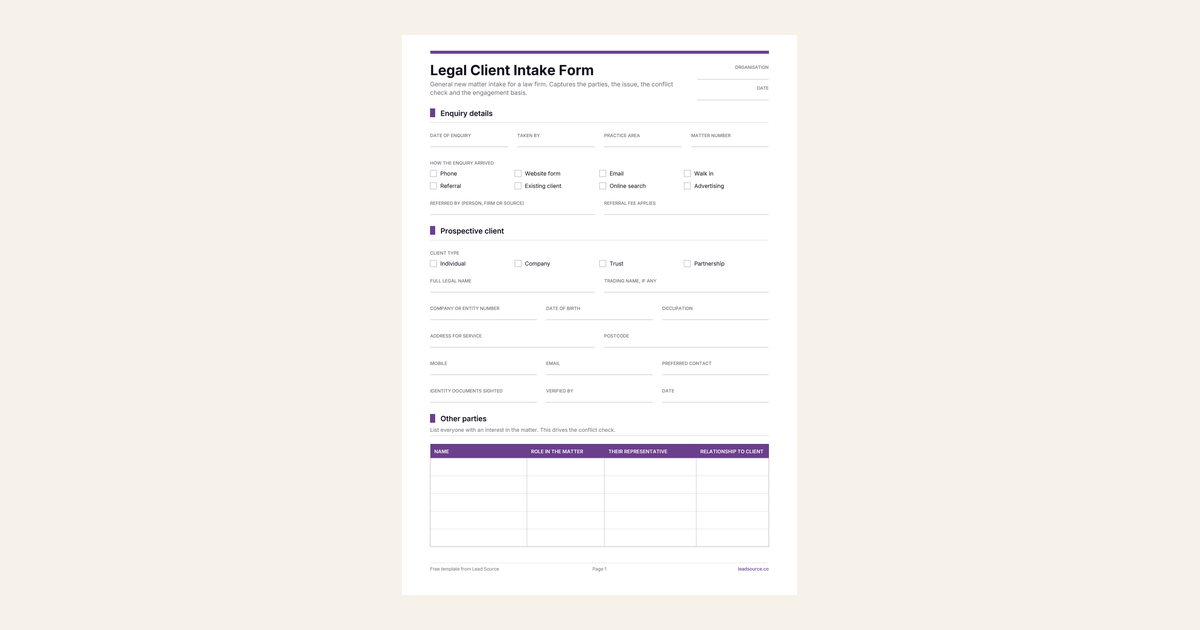
The form and the process
This is the same document covered field by field on the legal client intake form page. This page is about running the intake process, because the form only works if the process around it does.
Most firms have an intake form. Fewer have agreement on who completes it, at what point in the conversation, and what happens next in each of the possible outcomes. That gap is where matters get lost.
Who should take the enquiry
There is a real trade-off here and no universally right answer.
A lawyer taking intake gets better information and can assess merit immediately, but it is expensive and it means enquiries wait until someone is free. Non-legal staff taking intake is faster and cheaper, but they cannot assess merit and there is a risk of straying into advice.
The workable middle is that non-legal staff complete everything up to and including the conflict check and the matter summary, and a lawyer reviews before any assessment of prospects is communicated. The form supports this: the responsible lawyer field is separate from the taken by field.
What does not work is leaving it undefined, because then intake quality depends on who happened to answer the phone.
Three things that must happen before instructions
Conflict check first. Names of all parties, then the search, then the story. Taking detailed instructions before the search can conflict you out of a matter you would have preferred.
Limitation date identified. Even at the general intake stage, ask whether anything is time-limited and record it. The cost of asking is a question. The cost of not asking is occasionally catastrophic.
No advice. Intake is information gathering. The line between "tell me what happened" and "you probably have a good claim" is easy to cross in a sympathetic conversation, and it is the point at which a prospective client starts relying on you.
What happens to declined enquiries
This is the part firms handle worst.
Every declined enquiry gets a non-engagement letter in writing, saying the firm is not acting, not advising on merit, and that time limits may apply which the person should get advice about promptly. Send it whether you declined for conflict, capacity, merit or practice area.
The reason is not politeness. Someone who called a law firm, explained their problem, and heard nothing back frequently believes it is being dealt with. When the limitation period expires, the question of what they were reasonably entitled to believe becomes a live one.
Record the outcome and the reason on the intake form so that declined enquiries are as visible as accepted ones.
What intake data tells you
If intake is completed consistently, a year of forms answers questions most firms guess at. Where enquiries come from. Which sources produce matters you accept rather than just volume. Which practice areas are attracting work you decline. How long enquiries sit before a decision.
None of that exists unless the referral source, the outcome and the reason are filled in every time, including on the ones you turn down.