About this template
Why keep a contact form this short?
A contact form is the catch-all on your site. It takes people who know what they want, customers with a question about last month's invoice, and the occasional supplier pitching packaging. Its job is to get each message to the right person with a way to answer it. Anything past that belongs on a form built for a narrower job.
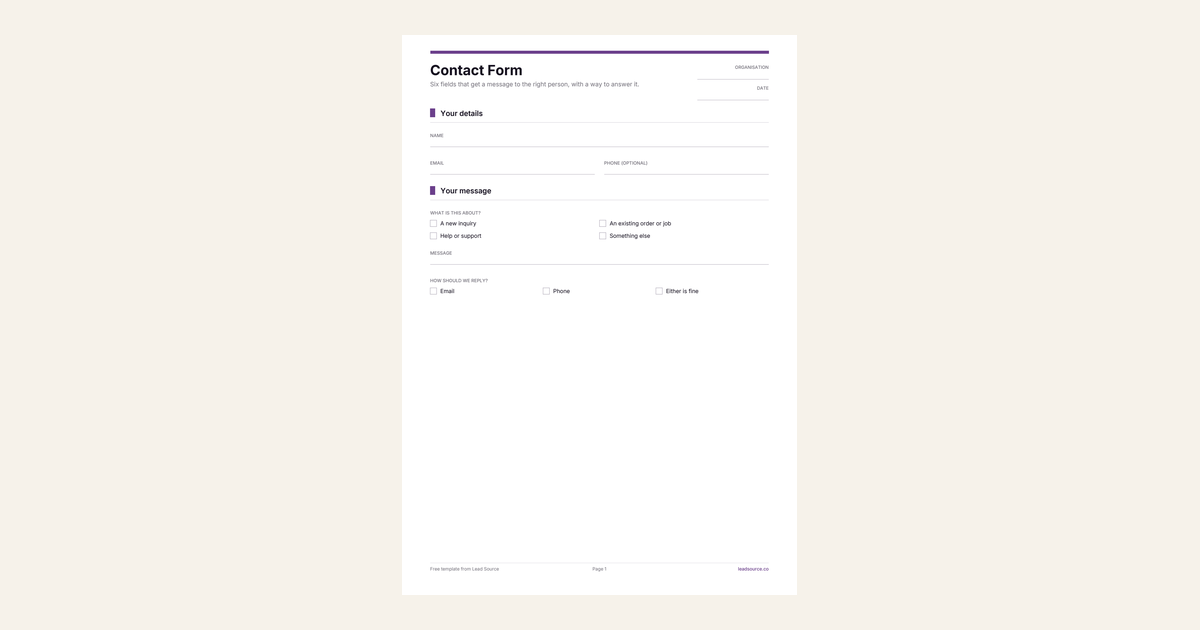
So every field faces one test: does the reply get worse without it? Name, email and the message pass easily. The topic choice passes because it routes the message. Company name, job title and budget fail here. They belong on a form where the visitor already expects to be qualified.
Should the phone number be required?
Usually not on a general contact page. Plenty of people use the form because they would rather not take a call, and a required number collects made-up digits. Make phone optional and ask how they would like a reply. If your team does its work by phone, such as a trade answering urgent jobs, make it required and say why beside the field.
The pairing does the work. Someone who picks phone and leaves a number has told you how to win them. Someone who picks email has spared you a voicemail nobody was going to return.
What does the topic question actually fix?
Routing, first. Without it a sales inquiry and a complaint land in the same inbox and wait in the same queue. With four plain options the new inquiry goes to whoever answers sales, and the support request goes to support. End the list with something else, so nobody picks a wrong answer because the right one was missing.
It also keeps your numbers straight. A contact form that collects support tickets makes a campaign look busier than it was if every submission is counted as a lead. Count the new inquiries and leave the rest out.
Which contact form template do you need?
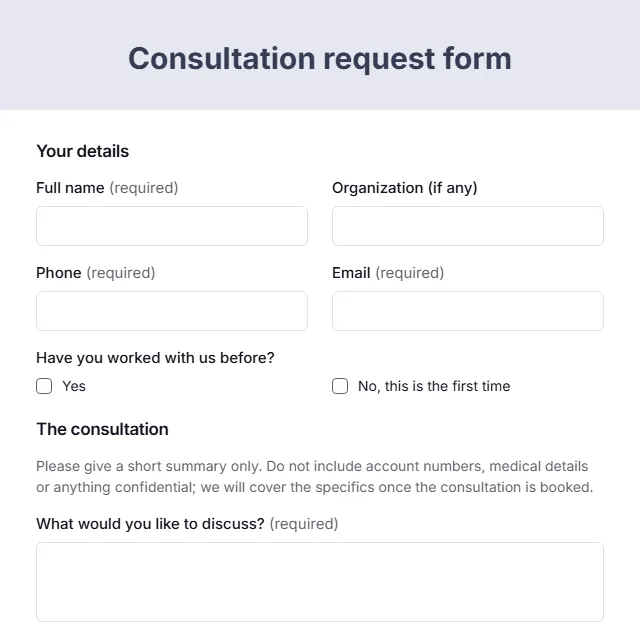
This one, for a general contact page. On a landing page you paid to send people to, use the lead capture form, which asks a qualifying question. When the visitor wants time with you, the consultation request form collects what makes the first meeting useful. When a customer is sending a friend your way, the referral form records both people, and a request for a price on a job belongs on the free estimate request form.
A form is not the whole job, either. You are collecting personal details, so read about the privacy obligation in a website contact form before you publish it.
Where did that message come from?
A contact form records what someone wrote, never how they found you. Lead Source fills that gap on every submission: the ad or channel, the campaign, the landing page and the pages read before the message was sent. It works with any form tool, added with one line of code, and it is free to start.
How to use this template
- Copy the six fields into your form tool, or fill in and download the PDF or Word version.
- Rename the topic options to match how your team splits its inbox.
- Put the form on your contact page with a link to your privacy policy beside the button.