About this template
Which answers actually help the gift giver?
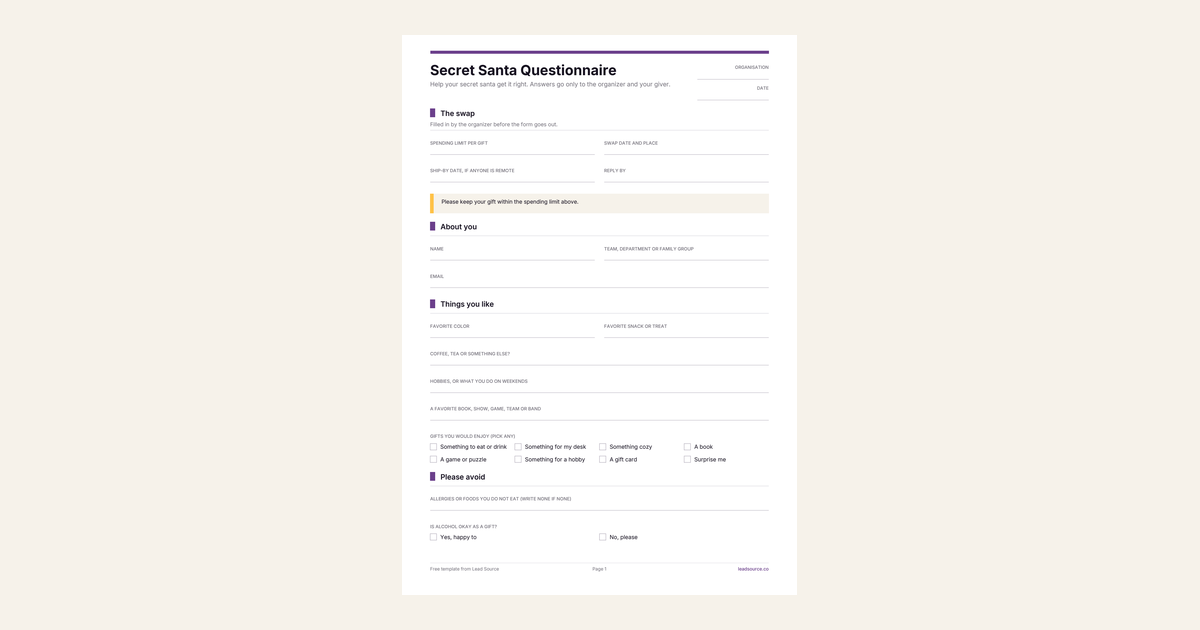
Specific ones. "I like coffee" produces a mug. "Strong coffee, nothing flavored" produces a bag of beans someone will finish. Ask for a favorite snack, a drink, a hobby and one favorite book, show or team, and the giver has four starting points instead of a guess.
The gift checklist does the rest. Someone who ticks a book and a puzzle has narrowed the search more than a paragraph of adjectives could.
Why is there a whole section on things to avoid?
Because the swap goes wrong at the edges. Allergies come first, and the field is required so a blank is never read as no allergies: ask people to write none. Alcohol gets its own question, since plenty of people do not drink, and a bottle is an awkward thing to hand back in front of colleagues.
Then the no-go list. Scented candles, novelty socks, a twelfth mug. Asking costs one line and spares somebody's desk drawer.
Who sets the spending limit?
The organizer, before anyone fills this in. Fill in the limit at the top of the form and put it in the message that sends it out. A limit stated once, clearly, settles more than a reminder in the week of the swap. If anyone is remote, say whether shipping counts toward it.
How do you run the draw?
Collect every questionnaire, then draw names so nobody gets their own. One person keeps the list and passes each giver only their own recipient's answers, never the whole stack. Shipping addresses stay with the organizer too: a giver needs to know where the parcel goes, not to keep a copy.
This one is seasonal. For what people thought of the party afterward, the customer feedback form adapts well.
To collect the answers online, copy the questions into your form tool and share one link. For paper, download the PDF or Word file.
How to use this template
- Fill in the spending limit, swap date and reply-by date at the top.
- Send the form at least two weeks before the swap, with a deadline.
- Draw names and pass each giver one questionnaire, privately.


