Clinical intake, not client-facing
A psychology or therapy practice where the intake becomes part of a clinical file. It covers more ground than the counselling version. It is structured for the practitioner reading it later, rather than the client filling it in.
If your clients complete intake unsupervised in a waiting room, the counselling version is a better fit. Use this one where intake is either sent in advance to an engaged client or worked through with the clinician present.
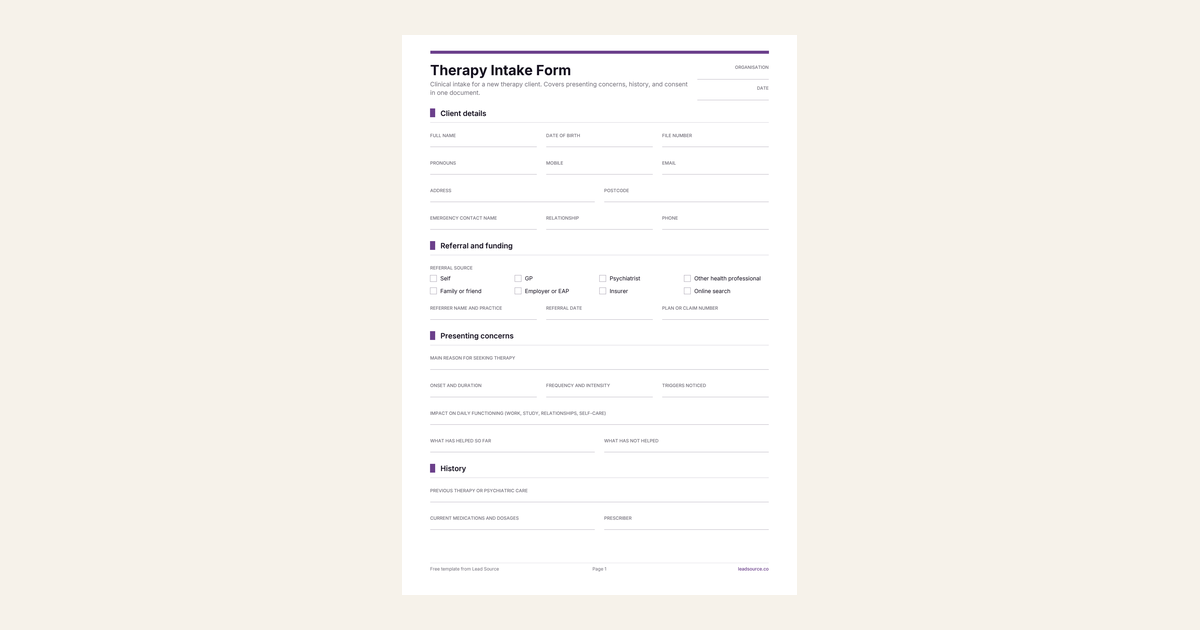
Referral, history and functioning
Client details with a file number. Referral and funding, which is the section most templates omit and every practice needs, referral source, referrer name and practice, then referral date, and plan or claim number.
Presenting concerns runs deeper than a general intake. Main reason, onset and duration, then frequency and intensity, and triggers, then impact on daily functioning across work, study, relationships and self-care, and what has and has not helped.
History covers previous therapy or psychiatric care, then current medications with dosages and prescriber, then medical conditions and allergies, treating GP, and family history.
Current functioning uses a twelve-item tick list, then goals, then consent, then two signature blocks, client and clinician.
Why funding is on the intake form
Referral source and funding arrangement determine session limits and reporting obligations, then rebate eligibility, and sometimes what you are permitted to treat. Discovering any of that in session four is expensive for both parties.
Putting it on the intake form also gives you something you would not otherwise have, a running record of where clients actually come from. Most practices could not accurately say what proportion of their new clients arrive via GP referral, or via direct search, or word of mouth, because the information is captured in conversation and never written anywhere countable.
The dual signature
Client and clinician both sign. The clinician signature is not a formality. It records that a specific practitioner reviewed the intake before treatment commenced, on a specific date.
An intake form sitting in a folder is information that was collected. An intake form with a dated clinician signature is information that was read. That is the difference, if a file is ever reviewed.