Written for the client, not the file
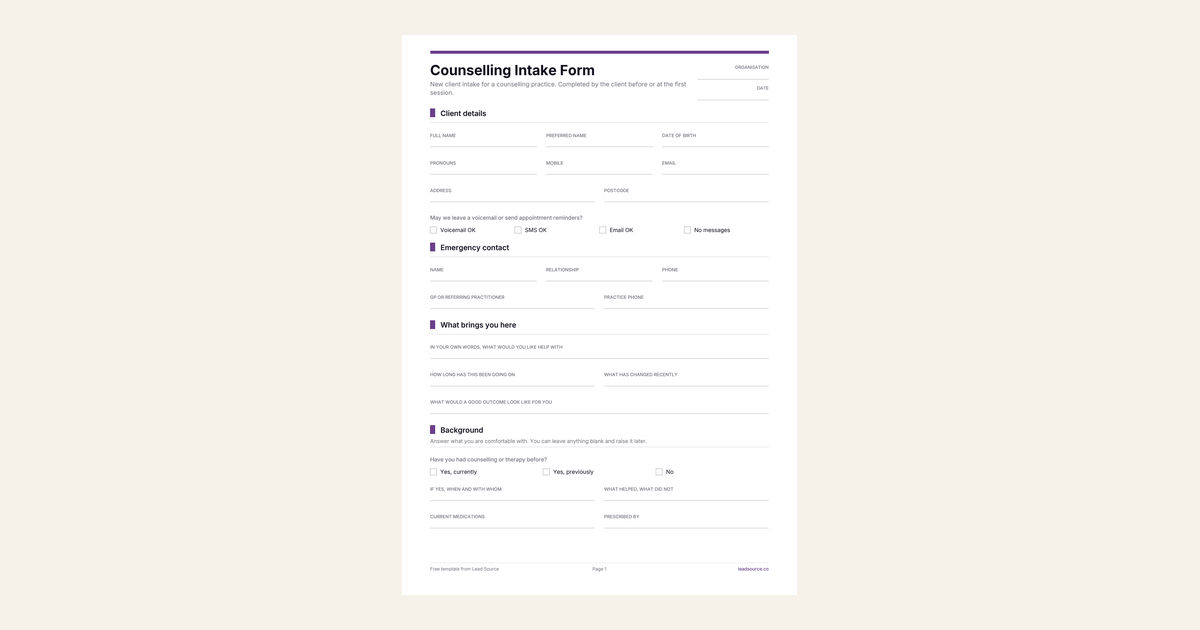
A general counselling practice taking a new client. It is completed by the client, either before the first session or in the waiting room, and the language reflects that. There is no clinical terminology in it that a client would need explained.
That is the main difference between this and the therapy intake form. Both cover similar ground. This one is written for the person filling it in. The other is written for the file.
Details, concerns and consent
Client details, and contact preferences including whether you may leave a voicemail, then emergency contact, and GP or referring practitioner.
Then the section that matters most. That is what brings you here, in the client's own words, then a full open block rather than a list of tick boxes. Followed by how long it has been going on, what has changed recently, and what a good outcome would look like.
Background covers previous counselling and what helped or did not, then current medications, and relevant history. Current circumstances covers living situation, work, and support, then a tick list of common areas of difficulty. That covers sleep, appetite, and concentration, then energy, relationships, and work, then money, substances, and anger, then grief, physical health and isolation.
The form closes with practical matters, and preferred times and format, then four consent acknowledgements.
The open question is the point
The instinct with an intake form is to convert everything into tick boxes, because tick boxes are faster to read. Resist it for the first question.
What a client writes in their own words when asked what brings them here is clinically useful in a way a checklist never is. The words they choose, and what they lead with, then what they minimise, and how much they write. A tick against "anxiety" tells you a category. Three sentences tells you where to start.
Keep the tick list too, but put it after the open block, not before. Presented first, a checklist frames the answer and the client writes to the categories you offered.
What this form deliberately does not do
It does not assess risk. There is no self-harm question, no suicidality screen, no scored instrument.
That is deliberate. Risk assessment is a clinical activity conducted in session, using a validated tool and your own judgement, by someone who can respond to the answer immediately. A tick box on a waiting-room form creates two failure modes. A client discloses something serious to a piece of paper and then sits in a waiting room with it, or a client ticks no because ticking yes to a form feels different from telling a person, and you record a false negative.
The form carries a practitioner note saying exactly this. So nobody adapting the template mistakes the omission for an oversight.