Skin history before any treatment
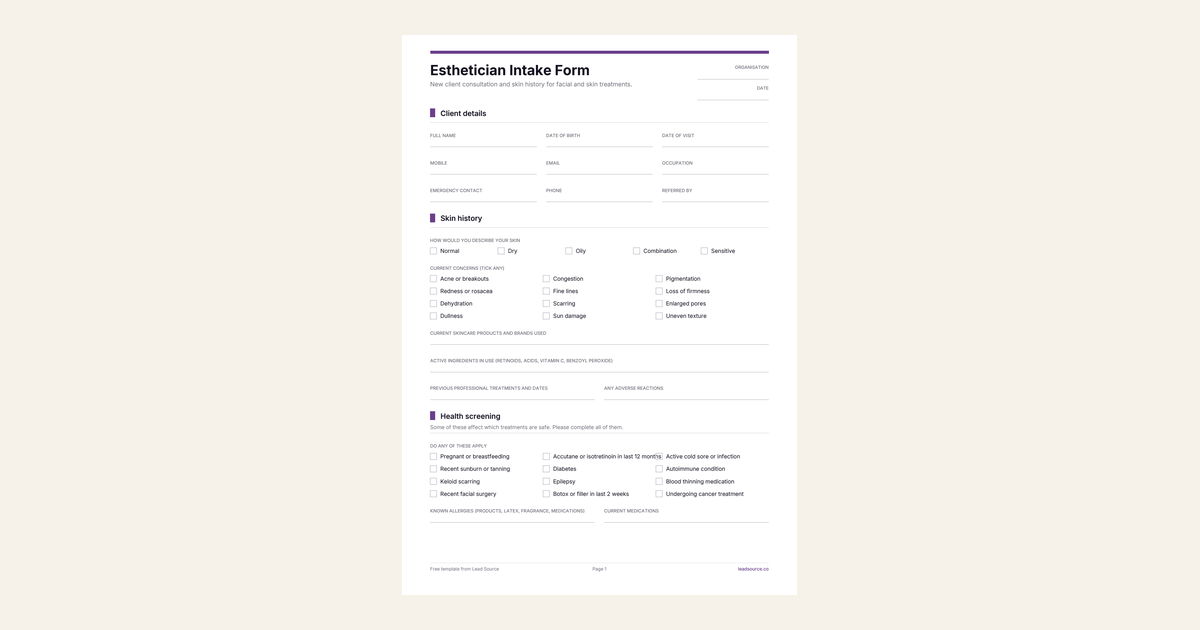
A new client consultation for facials, peels and exfoliation, then extractions and general skin treatments. It is completed by the client and then finished by the practitioner. So it functions as both an intake and a treatment record on one page.
Screening, patch tests and treatment plan
Client details and emergency contact. Skin type and a twelve-item concerns list.
Then the section that separates a real intake from a generic one, current skincare products and brands, and a dedicated field for active ingredients in use. That covers retinoids, acids, vitamin C and benzoyl peroxide. Followed by previous professional treatments and any adverse reactions.
Health screening uses a twelve-item contraindication list. That list is chosen for this treatment category specifically, rather than lifted from a general medical form, pregnancy, isotretinoin in the last twelve months, and active cold sore or infection, then recent sunburn, diabetes, and autoimmune condition, then keloid scarring, epilepsy, and blood thinners, then recent facial surgery, injectables in the last two weeks, and cancer treatment.
Then lifestyle and the practitioner treatment plan, then a patch test block, and dual signature.
The active ingredients field is the one that matters
Most intake forms ask what products the client uses and get "cleanser, moisturiser, serum" back, which is useless.
Asking specifically about actives gets a usable answer, and actives are what determine whether a treatment is safe today. A client on tretinoin who has a peel booked is a different proposition from one who is not, and they will not volunteer it unless asked directly. Because to them it is just the cream the doctor gave them.
Isotretinoin has its own line in the contraindication list, rather than sitting in the actives field, because the relevant window is twelve months, and clients routinely do not connect a course they finished eight months ago with a facial today.
Patch testing
The form carries a note stating that a patch test is required, before any first-time chemical exfoliation, peel or new active product. It carries a block to record the date, product tested and result.
Recording it on the intake form means the patch test lives with the treatment history it relates to, rather than in a separate book. When a reaction happens six months later, you have the patch test date on the same page as the treatment log. You have the product and the result. That is the difference between a reconstructable record and a guess.
The treatment plan section is not optional
The bottom third of the form is completed by the practitioner, skin analysis findings, treatment performed and products used, then home care recommended and next appointment.
Practices that skip this end up with a folder of intake forms that describe clients as they were on day one and never again. The value of the record is in the sequence, and the sequence only exists if someone writes in it each visit.