About this template
What does a technician need from a service request?
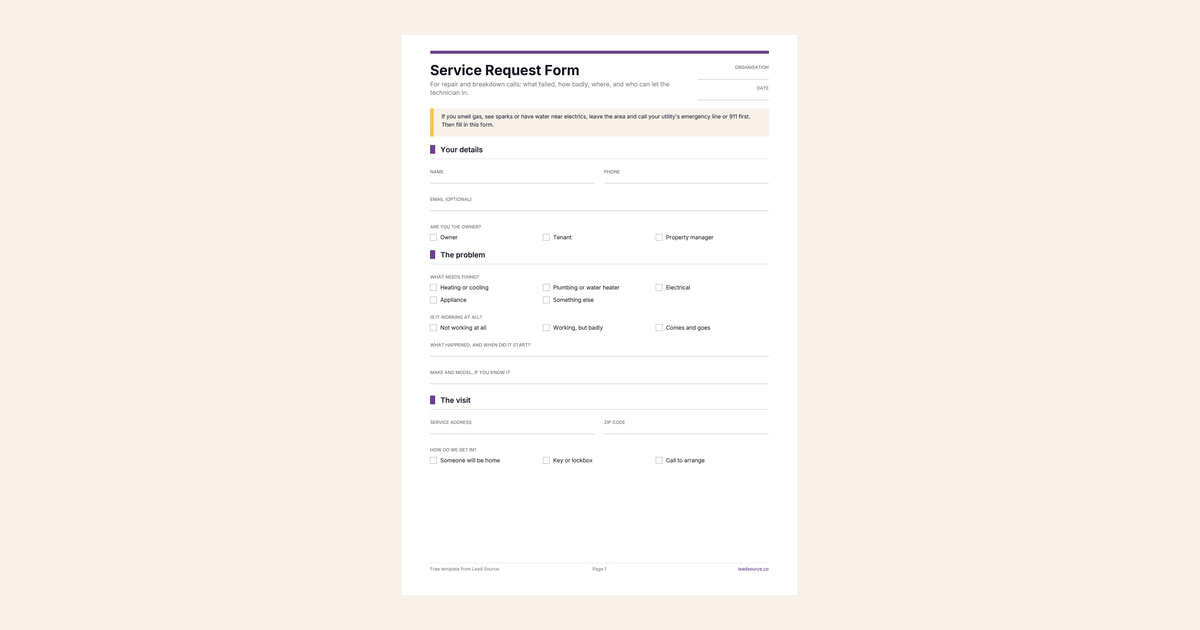
Enough to arrive once, with the right parts, at a door that opens. Three answers decide whether that happens: what the equipment is, how the fault behaves, and who will let the tech in. This form asks all three before a slot is booked.
The make and model is optional, because plenty of people cannot find the rating plate on a water heater in a dark garage. When they can, it is often the difference between fixing the fault on the first visit and coming back on Thursday with the part.
Who can approve the repair?
Not always the person who filled in the form. A tenant reporting a dead furnace is doing the right thing. In most rentals, though, the bill goes to the owner or the property manager. They expect to approve it first. Find that out after the work is done and you are chasing an invoice nobody agreed to pay.
The owner question settles it before dispatch. If the answer is tenant, get the owner's or manager's go-ahead, and a spending limit, before the technician starts. Note it on the job so the office and the tech are working from the same approval.
Why ask whether it works at all?
It is the triage question. Not working at all, on a furnace in January or the only toilet in the house, goes to the top of the board. Working, but badly can usually wait for the next open slot. Comes and goes is a warning in its own right. The fault may not show while the tech is there. Ask the customer to note when it happens and take a photo or a video if they can.
Service request or work order: which do you need?
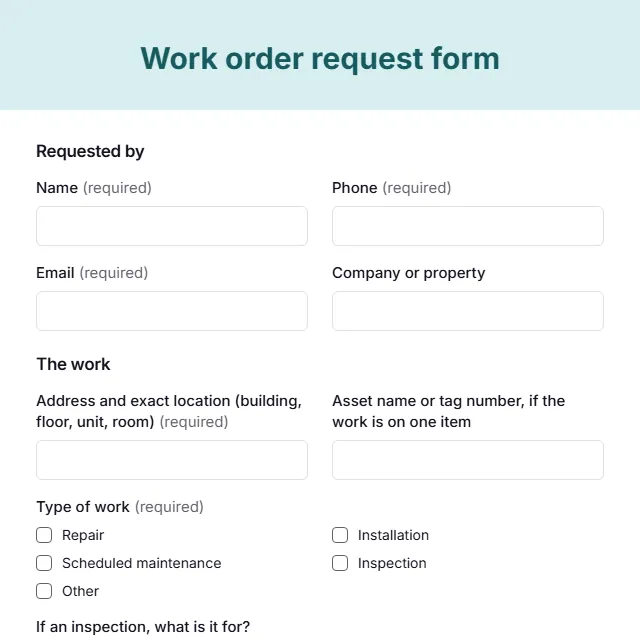
A service request comes from a customer whose something has stopped working, and it needs a reply fast. The work order request form is the step after, or the route for planned jobs: it records the scope, the priority, the access and who signed off, so the job can be scheduled. Many shops use both, the request on the website and the work order inside the business. For a planned visit with a fixed time, the appointment request form is lighter.
Breakdown calls also say a lot about which marketing works, because they come in when someone needs help now. Lead Source records how each request arrived: the map listing, the ad or the search. It adds the landing page and the pages read before it. It works with your existing form, with one line of code, and costs nothing to start.
How to use this template
- Edit the trade list to the work you actually take on.
- Keep the safety line at the top, worded for your trade and your local emergency numbers.
- Call back not working at all requests first, and confirm owner approval on every tenant request.