About this template
What does a blank message box get a plumber?
Enquiries like "water issue in the bathroom, please advise." That could be a dripping tap or a ceiling about to come down, tonight or next month. Someone has to ring back just to find out which, and by then the customer with the ceiling problem has booked whoever asked the right questions first.
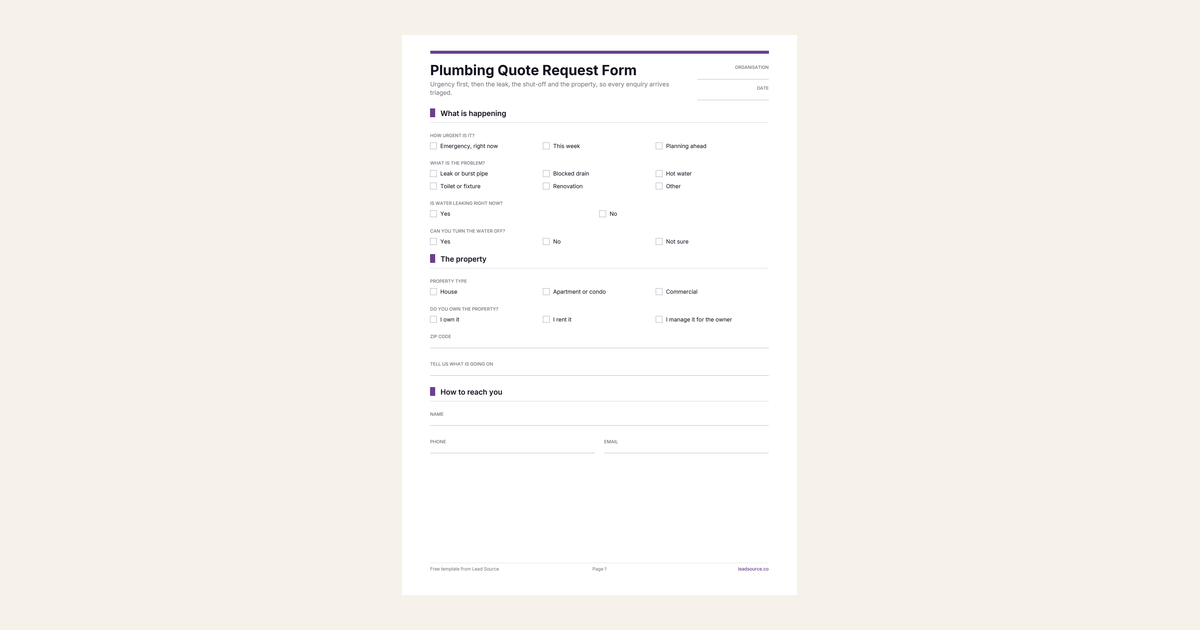
A plumbing form does the triage at the moment of submission, while the customer is still motivated enough to answer. Every field here sorts the job, protects the property or reaches the person.
Why ask whether they can turn the water off?
It is the one question that helps the customer before you arrive. A "No" or "Not sure" tells your tech to open the callback by walking them to the shut-off valve, before addresses or prices.
Pair it with the active leak question. Water running now means damage is adding up while the enquiry sits in a queue, and that answer alone earns an instant reply and a flag on the on-call phone.
Should emergencies and planned work share one form?
Share the form, split the path. Someone ankle-deep in water will answer the required questions and nothing else. Someone planning a new bathroom will happily answer the lot, description and property type included.
Make urgency the first question and let it decide what comes next. Both customers finish, and both enquiries arrive ready to act on.
Who can say yes to the job?
The person filling in the form cannot always approve the work. An apartment leak may need the building manager, a rental needs the owner, and a shop may need its landlord. The ownership question saves the visit where nobody on site can sign off.
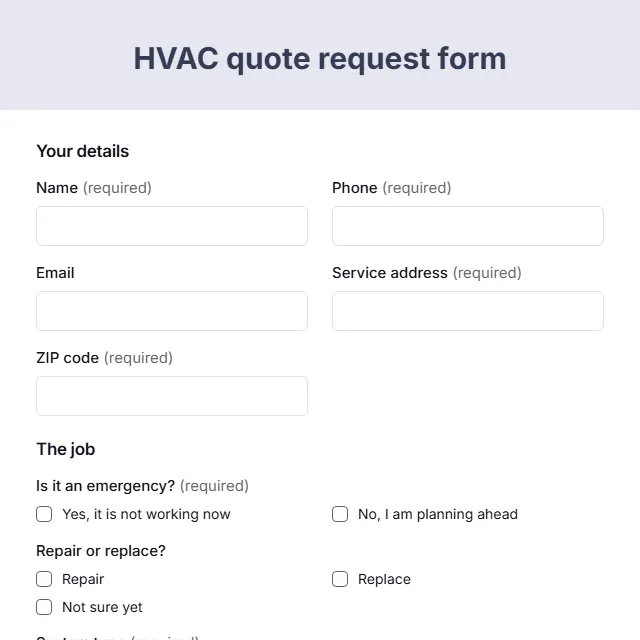
Pricing other work? The free estimate request form is the general template for any service business, and the HVAC quote request form covers heating and cooling.
How to use this template
- Fill it in and download the PDF or Word file, or copy the fields into the form tool you already run.
- Edit the issue types to match the work you take on, and drop renovations if you do not do them.
- Send emergency answers to the on-call phone, not the office inbox.