About this template
Why do generic contact forms fail for HVAC?
A blank message box collects mysteries. "Need someone to look at the heating" could be a small repair or a full replacement, this week or this winter. Every one of those needs a discovery call before anyone can act.
The fix is a form where every field does a job. Length is not the point. Each question has a reason to be there, and the description box catches what a tick list cannot. Anything that does not qualify the job or help you reach the customer gets cut.
Which field tells you the most?
Repair or replace. It separates a service call from a job worth thousands, and it tells you who should call back.
System age comes next. A 17-year-old furnace with a repair request is often a replacement conversation waiting to happen. Knowing the age before the call means your tech arrives ready for the right conversation.
Should emergency and planned enquiries share one form?
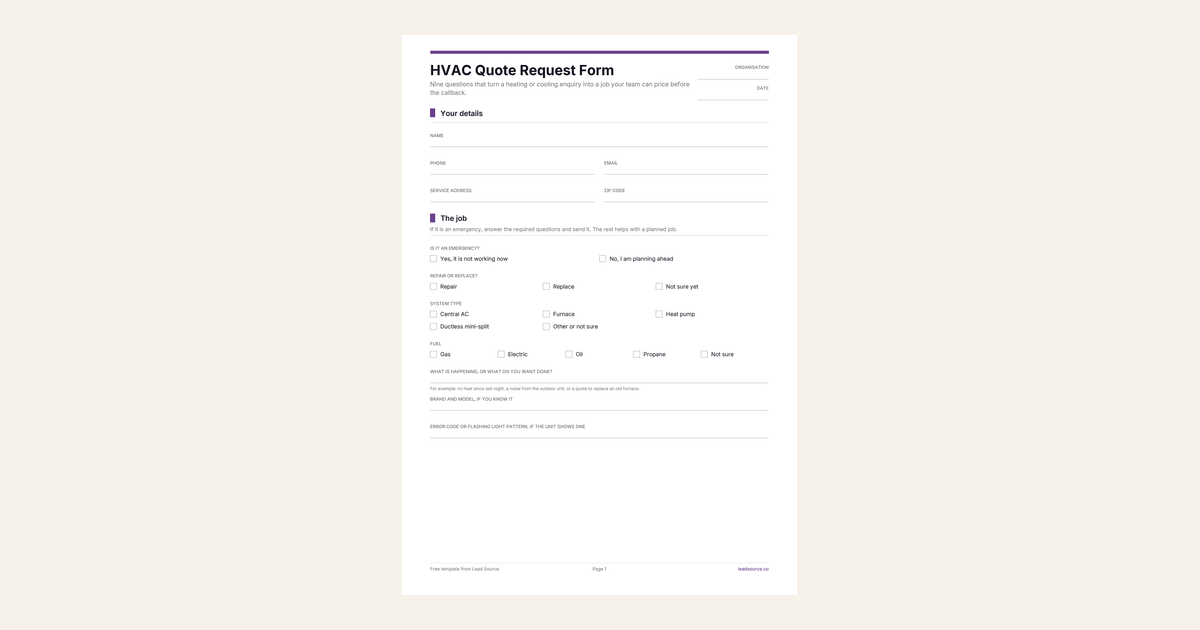
Treat the emergency answer as a fork, not just a checkbox. A homeowner with a dead furnace in January will not fill in a long form, so the template asks it first and keeps the emergency path short. Seven answers are required: name, phone, address, ZIP code, the emergency answer, system type and what is happening. Repair or replace, fuel, property size, system age and timeframe are optional, so a homeowner with no heat answers seven questions and sends it. If your form tool supports conditional logic, hide the optional questions when the answer is yes. Either way, promise a callback time on the confirmation.
A homeowner planning a replacement will answer every question, because the questions sound like they come from someone who knows furnaces. Reply the same day with a time for the visit.
Using it as an AC installation quote form
For a new install, tick Replace, or say in the description that there is no system yet. Then answer the duct question. A home with ducts can take central air on the existing runs, once a tech confirms their size and condition. A home without them is a ductless mini-split conversation, or a quote that includes new ducts. Property size gives the estimator a first read on equipment size, so the right options come to the visit.
Using it as a furnace repair form
Tick Repair and Furnace, then pick the fuel. Propane is on the list for homes off the gas line. The error code box saves a trip. A furnace that locks out often flashes a status light or shows a code, and that pattern tells the tech which part to bring. A homeowner with no heat still answers only the seven required questions.
Why is there no "How did you hear about us?" field?
Because people mostly answer "Google", whether it was an ad, a map listing or a friend's link. Self-reported source is a guess.
Lead Source records the real source with each submission: the ad, the campaign, the landing page and the pages read before the enquiry. Nobody has to type it, and it works on any form tool.
How to use this template
- Start from the template. Fill it in and download the PDF or Word file, or copy the fields into the form tool you already use.
- Change the options to match your services, for example add boilers, remove oil if you never see it, or add a photo upload if your form tool has one.
- Tell customers what happens next: a callback, a visit, then a written estimate. The form asks for a quote, not a booked appointment or a fixed price.
- Embed it on your quote page and add the one line of Lead Source code to your site, so every request arrives with its source.