When to use a briefing record
A safety sign-in sheet is not a sign-in sheet. It records attendance at a specific briefing. The reason it exists is to demonstrate that particular people were told particular things on a particular day.
That is why the format is different from a site sign-in sheet. A list of names proves a meeting happened. It does not prove what was said, and if the sheet is ever examined after an incident, what was said is the only question anyone cares about.
Briefing details and attendance
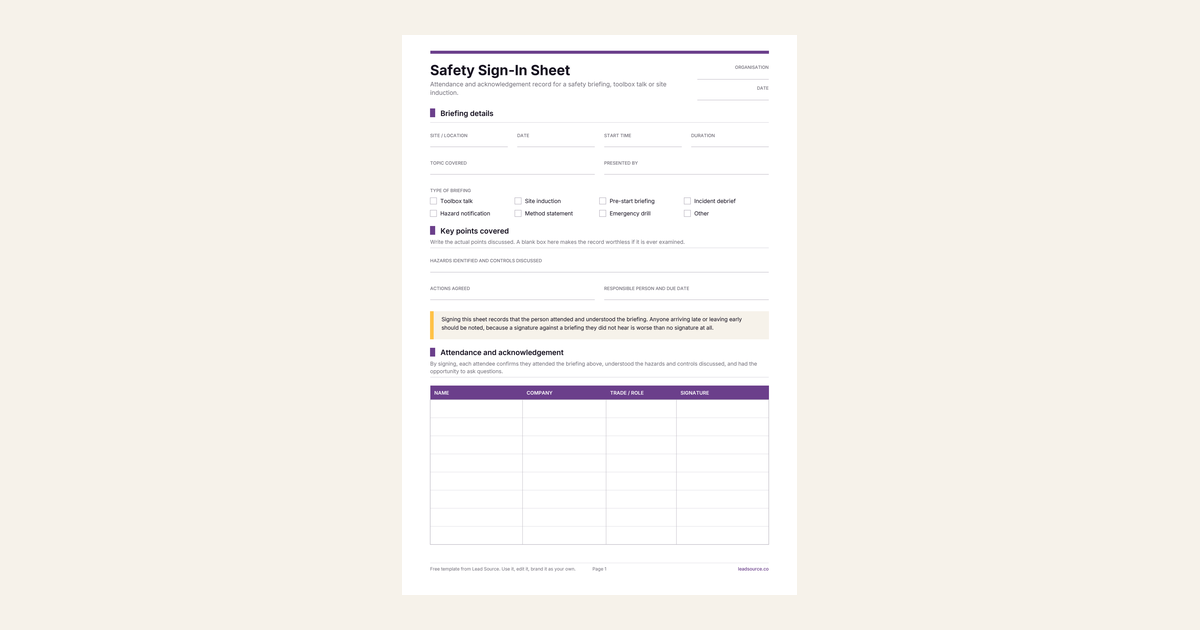
The top section records the site, date, and start time, then duration, topic and presenter. Plus a tick for the type of briefing, toolbox talk, site induction, and pre-start briefing, then incident debrief, hazard notification, and method statement, then emergency drill or other.
Below that are the fields that do the real work. A block for hazards identified and controls discussed, then a smaller block for actions agreed with a responsible person and due date against each. These are the fields people skip, and skipping them is what makes a briefing record worthless.
The attendance table then captures name, company, trade and signature, under a stated acknowledgement. By signing, each attendee confirms they attended, then that they understood the hazards and controls discussed, and that they had the opportunity to ask questions. The presenter signs at the bottom confirming they delivered the briefing and addressed the questions raised.
Write the content, not just the topic
The single most common failure is a completed sheet where the topic field says "working at heights" and the hazards block is blank. Twenty signatures against a two-word topic tells you nothing. It does not establish what was covered. It does not help the next supervisor pick up where you left off, and it will not withstand any scrutiny at all.
Two or three specific lines are enough. What the hazard was, what the control is, and what changed. "Scaffold on the east elevation, handrail missing on level three, taped off until repaired Thursday, do not use" is a real record. "Working at heights" is a heading.
Late arrivals and early departures
If someone arrives halfway through, note it against their row. A signature that says a person heard a briefing they did not hear is worse than no signature, because it converts a gap in your records into an inaccurate positive record. The same applies to anyone who leaves before the end.
The honest handling is to note the partial attendance, then re-brief that person separately. It takes two minutes and it keeps the record true.