Four things a studio needs on record
A tattoo appointment, from walk-in to multi-session piece. It covers the four things a studio needs on record. That you verified age. That you screened for health issues. That the client approved the design, and what you actually did.
Check your local health authority requirements before using it. Tattoo studios are directly regulated in most jurisdictions, and the specific record-keeping obligations vary.
Age verification, screening and design approval
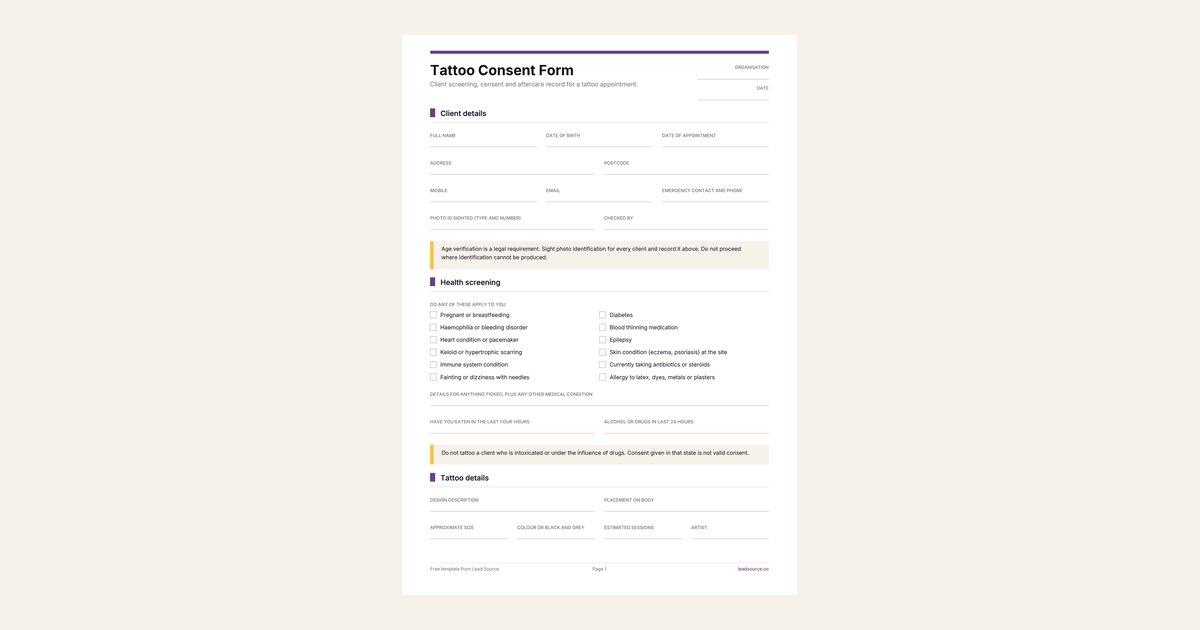
Client details plus a field for the photo ID sighted, its type and number, and who checked it.
Health screening covering twelve items chosen for tattooing specifically, pregnancy, diabetes, and haemophilia or bleeding disorders, then blood thinners, and heart condition or pacemaker, then epilepsy, keloid scarring, and skin conditions at the site, then immune conditions, current antibiotics or steroids, and fainting with needles, and allergies to latex, dyes, metals or plasters, then whether they have eaten in the last four hours and whether they have had alcohol or drugs in the last twenty-four.
Tattoo details, design description, placement and size, then colour, estimated sessions and artist, then a separate line for spelling, dates and wording checked and approved, with a client initial.
A nine-point client declaration, then a studio record with artist, and needle and ink batch details, then times, aftercare confirmation and artist signature.
Age verification has its own field for a reason
Photo ID sighted, type and number, and who checked it. Not a tick box.
A tick that says "over 18" records a belief. A recorded ID type and number records a check. The difference between those two is the whole thing, where age verification is a legal obligation.
The form carries a note stating that identification is a legal requirement. That it should be sighted for every client, and that you should not proceed where it cannot be produced. That last part matters, because the pressure in the moment is always to make an exception for someone who obviously looks old enough.
Intoxication
A client who is intoxicated cannot meaningfully review a design or a health declaration, reason enough to reschedule.
This is worth having in writing rather than as studio lore. It is easier to refuse someone when the form in front of them says it, and an artist who has declined can point to a policy, rather than making it personal.
The "have you eaten in the last four hours" question is doing related work. Fainting during a session is common, unpleasant and mostly preventable.
The spelling line
Design description, placement and size are on the form, and then there is a separate line just for spelling, dates and wording. That line is initialled by the client.
Misspelled tattoos are the single most common source of studio disputes, and they are almost always avoidable. A dedicated initialled line forces the check to be a discrete moment, rather than something folded into general design approval.
Have the client read it back rather than just look at it.