Low-volume reception desks
Low-volume premises. A small office, a workshop, a studio, a site that gets three or four visitors a week. Printing a fresh sheet every morning for a page that collects two entries wastes paper and, more importantly, produces a drawer full of near-empty sheets that nobody can search.
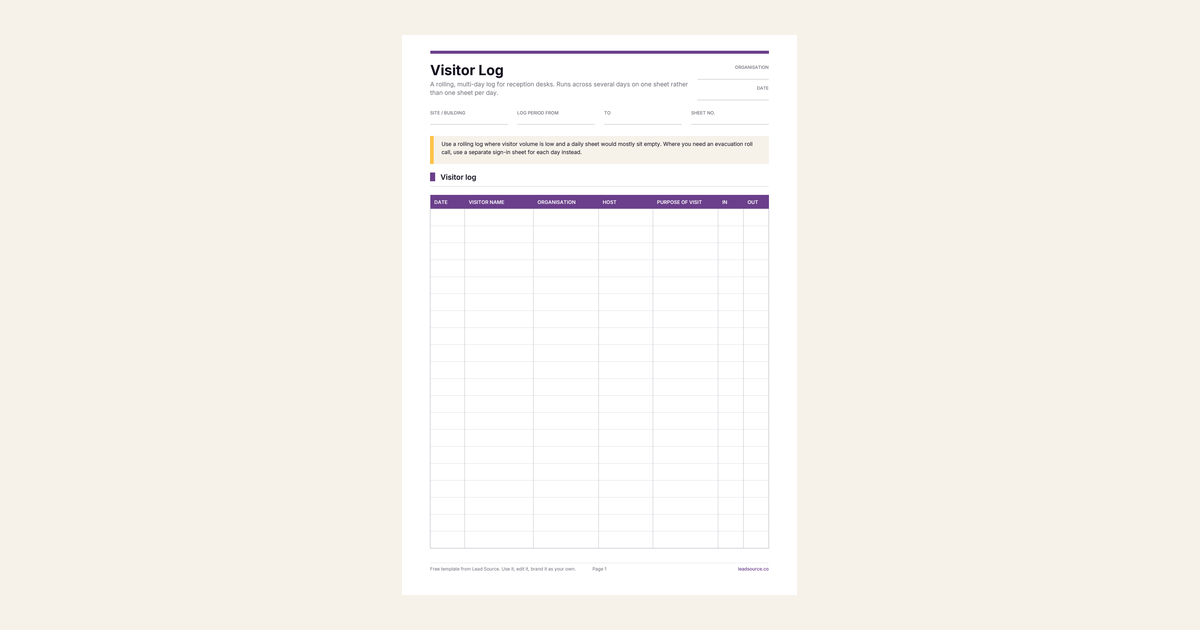
The log format runs forty rows across whatever period they take to fill, with a date column on each row rather than a single date in the header.
The rolling log and its columns
A short header for the site, the log period and a sheet number, then seven columns: date, visitor name, organisation, host, purpose of visit, in and out.
Below the table sits a record keeping block covering three things. That completed sheets are stored securely with restricted access, and that they are retained only as long as needed and then destroyed securely. And that visitors have been told what the log is for and how long it is kept.
When not to use this format
If you need the sheet to function as an evacuation roll call, use a daily sign-in sheet instead. This is the trade-off the log format makes.
With a rolling log you cannot tell at a glance who is currently on the premises. The rows for today are mixed in with the rows for last Thursday, and during an evacuation nobody is going to scan dates under pressure. If the number of people on site at any moment could exceed what someone can account for from memory, you need the daily format.
The privacy question is bigger here
A daily sheet gets filed at the end of each day. A rolling log sits on the desk for weeks, accumulating a browsable history of who visited and who they saw, in full view of everyone who signs it.
Tell visitors what the log is for. Keep it turned away from where people wait. Set a retention period and actually apply it, because the failure mode with a rolling log is that sheet twelve goes into the same drawer as sheets one to eleven and none of them are ever looked at again.