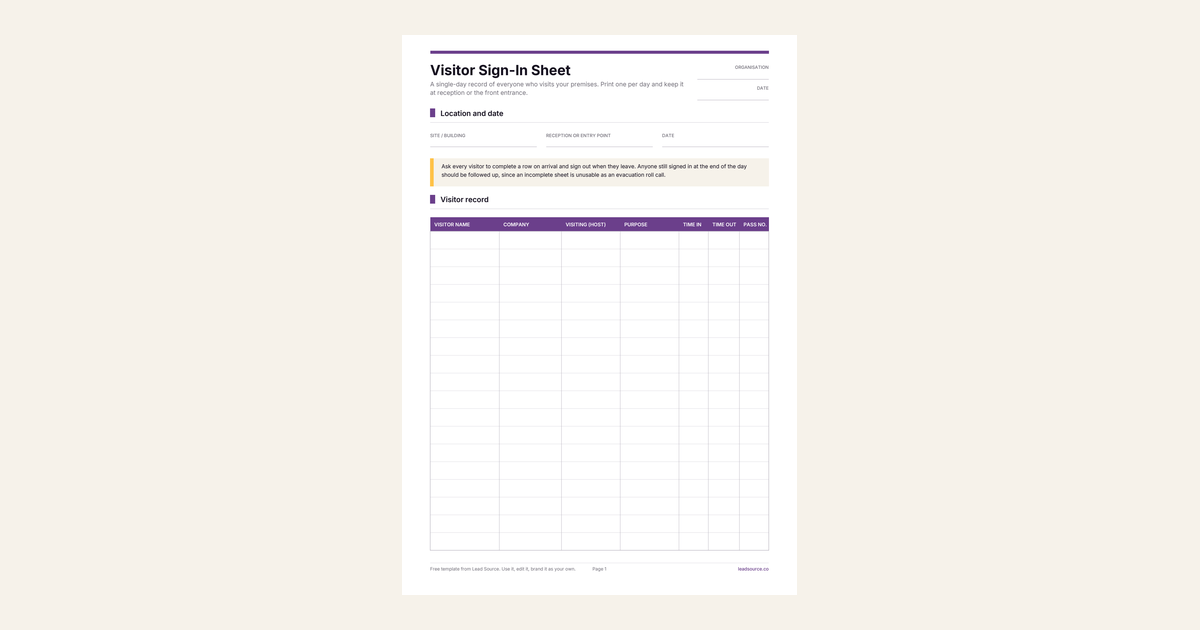
One sheet, one day
A visitor sign-in sheet for an office, clinic, or school, then a warehouse or any premises where people arrive, are hosted by someone, and leave. It is a daily sheet, and that is deliberate. If you want a rolling record across several days, use the visitor log format instead.
Visitor details and conditions of entry
A short header for the site, the entry point and the date, then a seven column table, visitor name, company, and who they are visiting, then purpose, time in, and time out, and pass number.
The host column is the one that earns its place. It converts the sheet from a list of strangers into a list of people someone in the building is responsible for. That matters both for everyday accountability and during an evacuation, when the question is who is here and who is with them.
Below the table sits a conditions of entry block with four default conditions. That covers escorting, visitor passes, evacuation procedure and photography. Amend these to match your own site rules before you print. They are a starting point, not a policy.
The sheet is on public display
This is the thing most people miss. A visitor sign-in sheet sits open on a reception desk, and every visitor who signs in can read every entry above theirs, a list of who has visited, who they met and when.
For most organisations that is a minor issue. For a law firm, a clinic, a recruiter or anyone whose visitor list is itself sensitive, it is a real one. If that applies to you, the fix is either a sheet with a privacy flap, individual slips collected into a box, or moving to a digital system where each entry disappears on submit. Continuing to use an open sheet while knowing the list is sensitive is the option to avoid.
Retention
Keep the sheet out of public view once the day ends, set a retention period, and destroy sheets securely at the end of it. A visitor log holds personal information, and a drawer of two years of sheets that nobody has ever consulted is a liability rather than a record.